Tuesday, July 9, 2013

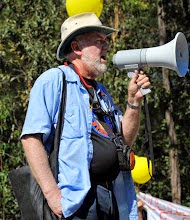
The US Alliance and Australia - 2nd Manning Clark House Talk July 5 2013

Session 2
The US Alliance and Australia
Australia signed up to ANZUS, a military alliance with the US, in 1951 under the anti-communist eye of Prime Minister Menzies.
The Australian military budget immediately increased by 150%, partially of course because this was the time of the Korean War and also because the Menzies Government wanted to impress the US with its loyalty.
This was in the midst of a housing crisis and a backlog of post war reconstruction but pleasing the US was more pressing than the needs of pesky Australians.
It set the pattern for successive Australian regimes right up to the present, a pattern which in blunt Australian talk is called ‘brown nosing’. 
The Alliance is the underpinning for the democratic and human rights abuses that I mentioned earlier when talking about the US bases on our soil.
There is an interesting question I don’t have time to go into now which is what is the impact of this subservience on Australian attitudes towards our independence and sovereignty.
There is a high level of support for the ANZUS alliance but it is based on the misconception that the US will come to our aid if ever Australia is invaded or seriously threatened in some other way.
In fact, of course, the actual wording of the ANZUS treaty does not compel the US to come to assistance of Australia should there be a danger on our borders nor does Australia have to do likewise for the US.
However, Australia has come to the US’s assistance in many conflicts from the Korean War to the Afghan War and Australian lives and Australian taxpayer’s money have been wasted on pursuing the foreign policy goals of the US.
We had no quarrel with the Koreans, with the Vietnamese, with the Iraqis or with the Afghans yet we sent young men and women to those places like obedient lambs to the slaughter and helped kill hundreds upon thousands of innocent people.
The most immediate effect of the alliance has been on our military spending.
In 2012 Stephen Smith cut the military budget by $7 billion which caused an angry response from the US. Mutters about ‘not pulling your weight’ were put about by various US commentators close to the US Government, the Pentagon and the US arms corporations.
In 2013 the military budget went up by just  over $1 billion. It is now $25 billion for this year which is around 10% of our disposable income.
Smith’s claim that Australia is the 2nd highest per capita spender on the military in the world which puts us behind the US but before big spenders like Britain and France,
The figure is indefensible when we consider that Australia’s strategic position makes it almost impossible to invade or hopelessly expensive to invade.
Considering that there is no country threatening or even looking like it could threaten to invade, why is the Australian military budget so high?  The budget is so high because we have to be ready to go off in a ‘coalition of the willing’ with the US at the drop of a hat.
The Alliance with the US skews our defence spending. We are corralled by the US to purchase equipment and engage in training that suits their needs. Interoperability is the term for turning the ADF into a de facto arm of the US military, with the equipment to match.
The weaponry we buy as a result of the Alliance is exorbitantly expensive and inappropriate for island defence. Based around long range delivery platforms, it does nothing for a balance of trade and makes us poorer, not more secure.
Apologists for the Alliance assert that we cannot have an independent non-aligned foreign policy as it would cost Australia too much to provide its own security.  We are deeply indebted to the US for giving us a shelter under their umbrella.
Complete nonsense!  The ledger is all on the side of the US, and Australia pays and pays for the dubious privilege of being aligned unquestioningly to the US.
The US gets an ally in International forums, a lever to apply at home, total support in the wars they start every 14 months, and 50 bases to play with on Australian soil.
The bases here give US troops experience in working the tropics and in dry savannah land as well as ports and airfields all for free!
The relationship expressed in the Alliance has to be changed. We should abandon the military interoperability and develop instead a relationship of mutual respect and reciprocity in fields such as trade, culture and education,
There has never been an adequate public discussion of Australia’s defence needs and how to respond to any threats that may arise.
Security threats that have been identified most clearly are smugglers and terrorists attacks. Submarines or F35’s do not assist much with those problems
The other threat is environmental be it fire, cyclone or flood.
In the Queensland floods the Australian Navy did not have a supply ship able to provide aid to those stranded in various parts of the state.  The skewing of priorities can be seen right down to this level of involvement and it can be all sheeted home to the US alliance. 
The Alliance affects our political system which is manipulated so that it can continue the massive direction of resources to the military and the use of our country as a staging post for more military adventures.
The major political parties vie with each other to see who can demonstrate the greatest loyalty to the US, too often to the detriment of the interests of our own citizens.
Questions about the role and cost of the bases, calls for a public enquiry into how best to make our nation secure, questions about the level of military spending are met with suggestions that ordinary people cannot deal with such complex topics or that the peace movement is anti-American.
The Alliance assists Australian big business to spread its own enterprises in the region, to become little imperialists at the expense of local people.  The behavior of Australian mining companies in the Philippines and Africa has been less than impressive. 
The Australian media is dominated by media owners and other pressures that discourage discussion of US involvement in Australia’s life. When stories on these topics are covered, the range of views published is severely limited.  The Australian people never get to hear all views so that they can make informed choices.
Political interference in Australian internal affairs is par for the course. The most scandalous occurrence took place during the ascendancy of Mark Latham as leader of the opposition when the US Ambassador publicly campaigned against the ALP. This is the arrogance that we have unfortunately come to expect from US representatives.

It is our view that the ANZUS alliance should be converted into a non-military relationship with the US in the interests of Australia’s economy, security and sustainable development.

Manning Clark House address no 1 July 5 2013

Session 1          The military facilities
In the 1980’s I lived in Alice Springs and worked with Aboriginal people in various roles.
Alice Springs had town camps for the different groups of Aboriginal people and these were my area of concern. They were totally inadequate. Sometimes as many as 50 adults and children were dependent on a single tap.
In contrast the staff of Pine Gap was housed in a different part of town with all the mod cons of middle class suburbia including sprinklers for their front lawns.
The disparity of treatment between our indigenous people and the staff of Pine Gap was part of what drove me to question the role of the bases and finally to join the Anti-Bases Campaign. 
US military facilities in Australia
The Anti-Bases Campaign defines a base as any land or facility that is set aside for the use of the US military at any time it deems necessary. There are approximately 50 US military facilities in Australia today of varying sizes and functions. They range from the large Pine Gap facility near Alice Springs to much smaller facilities.
A large percentage of Australian bases have been and are part of what is called 4CI, command, control, communication, computer and intelligence.  To these have been added training, battlefield, and logistics bases and now a troop base.
US bases were established in Australia in the 1960s to meet the needs of the US military. They were described as “joint facilities” but this was a fiction to cover what was in reality US control of their running and of the intelligence they gathered on military, economic, political and diplomatic matters of friends and foe alike.
As the technology of war grew Australia’s position grew in importance. Satellites controlled from Australia had their eyes on areas of considerable economic and political significance for the US – from the Middle East oil fields to far the far north of China.
The US military facilities in our country damage our citizens. They deny Aboriginal land rights, they undermine our democratic rights as militarism grows, they deny us the social services we need as military spending escalates, they put our lives at risk by making our country a target.
Intensification
US involvement in Australia was intensified by US President Obama’s visit to Australia in 2011. 
At that time he announced that the focus of the US military would be redirected to Asia and the Indo-Pacific regions. It was clear to all commentators that China was central to this realignment.
This US strategy includes the stationing of US troops in Darwin.  But the experience of US bases around the world and the interests of our people combine to make us insist that there are profound security, social, economic and environmental reasons for Australia to resist the stationing of foreign troops on our soil.
The bases and the stationing of foreign troops in Darwin have been sold to the Australian people as a form of security.
Security comes from having food, employment, housing and education. Reliance on ever increasing numbers of increasingly sophisticated weapons robs our people and the people of nearby states of all those things that engender security. 
Tertiary education was raided when money was needed for the Gonski reforms while at the same time the military was awarded a funding increase in the latest budget. 
Full knowledge and concurrence
Minister Stephen Smith recently described the Australian Government’s relationship with US military facilities on our soil as “Full knowledge and concurrence”.  This is simply unbelievable.
Negative impacts
This secrecy and lies are an example of how the existence of the US bases and our support for the US military undermines our right in a democratic society to know what is being done in our name.
Aboriginal rights are undermined. The use and abuse of the traditional lands of indigenous people is based on the military’s view of Aboriginal lands only for their potential to provide training ranges and military bases,
While $25 billion is spent annually on the military, funding for indigenous health, education, job creation and other services is woefully inadequate.
Services that our community has a right to expect – public health, public housing and much more – are painfully underfunded while exorbitantly expensive white elephants like the F-35 strike planes stay on the shopping list.
The US military has an appalling record of running roughshod over indigenous rights. We have only to look at the fate of their own Native Americans as well as Okinawans, Marshall Islanders, Hawaiians, the Chamoru of Guam, and many others.
We must recognise too that policies resulting from Australia’s force posture review – which was done virtually in conjunction with Obama’s force posture review – mean increasing militarisation in Australia’s north and north-west. There may have been some token consultation with Aboriginal people the changes to our “force posture” I am not aware of compensation for these lands and arrangements for cultural continuation on those lands.
As militarism flourishes, the democratic rights of our community are also under threat. We only have to look, for example, at the raft of recent ASIO and associated legislation and the new laws to protect “communications facilities” – another polite term for the bases.
It is beyond question that money invested in civilian projects creates far more jobs than the same funding spent on the military.
The US military’s list of chemicals toxic to humans and to land and marine life is a long one – depleted uranium, red and white phosphorous, cadmium and lead, to name just a few.
The National Cancer Institute stated: “The military is a major source of toxic occupational and environmental exposures that can increase cancer risk…”
For over a decade the US has refused to accept responsibility for asbestos and diesel fuel contamination at the North West Cape base.
Resistance
The bases have been resisted right from their start of their introduction into Australia in the 60’s and it continues to the present.
The Australian Government knows this and uses secrecy, disinformation and language to protect the bases. They are never “bases” -- joint facilities has a better ring to it. The US marines are not based in Australia, they are rotating through Darwin, similar to the use of ‘collateral damage’ instead of killing.
There was resistance in the 60’s and 70’s but it grew in the 80’s when Foreign Minister Hayden admitted that the bases made Australia a target in a nuclear exchange.
In 1983 a large women’s camp was established outside Pine Gap, and this was followed some years later with formation of the Australian Anti-Bases Campaign Coalition (anti-bases for short).
Anti-Bases has organised protests at US facilities, against war games, in solidarity with indigenous people across the Pacific, against exorbitant military spending and on other issues and continues to organize and agitate for the removal of US bases from our soil. 
Anti-bases has a commitment to always seeking permission from indigenous elders for our protests and Aboriginal cultural and religious rules are respected. We charge rent for the use of the land – a small symbolic sum each day from each protester with the money given to a local Aboriginal organization. We have always tried to have indigenous speakers at our actions and we have funded visits by indigenous representatives from Kanaky (New Caledonia) -- who was later shot and killed by the French – from Bougainville, Hawaii, North American Indian, the Philippines and Guam. 
The anti-bases campaign has recently been at the forefront of promoting and encouraging a new configuration of forces to oppose the base in Darwin and the pivot to Asia and the Indo-Pacific by the Obama regime.
We have contributed to the establishment of the Independent and Peaceful Australia Network (IPAN) which has branches in most Australian capitals including Darwin.
It is possible that you have not heard of either Anti-Bases or IPAN but that is because we have a budget of around $500 while the other mob have $billions.
We believe that the closure of these bases would be a positive step towards world peace and disarmament and well as to the economic and social development of Australia and the human and democratic rights of all Australians.

I have left information on the table and I would urge you all to take some and read it, and to become active in the fight for peace with justice.

Thursday, August 18, 2011

Address for Acting Foreign Minister Graig Emerson re: Guatemalan Elections

Australia

The Acting Foreign Minister

The Hon. Craig Emerson

c/- Parliament House

Canberra ACT 2600

Send snail mail

Or email :

craig.emerson.mp@aph.gov.au

Addresses for Guatemalan President and Ombudman

GUATEMALA
Head of State/Government: President Álvaro Colom Caballeros
Foreign Minister: Roger Haroldo Rodas Melgar
2a Avenida 4-17
Zona 10 Ciudad de Guatemala 01010
Guatemala
Ph. + 502 348-0000
Email:
webmaster@minex.gob.gt
Website:
http://www.minex.gob.gt/

Ombudsman of Guatamala

http://www.pdh.org.gt/index.php?option=com_contact&view=contact&id=2

click on this link and copy and paste into an online form..

Letter to the Acting Foreign Minister re: Guatemalan Elections

……………………………..

……………………………..

…….……..postcode……..

Australia

The Acting Foreign Minister

The Hon. Craig Emerson

c/- Parliament House

Canberra ACT 2600

Dear Minister,

Re: the General Elections in Guatemala

We wish to draw your attention to the General Elections in Guatemala to be held on September 11th.

We have considerable concerns following reports from Guatemalan citizens as well as Australian citizens who were refugees from that country of bribery, violence and intimidation marring the possibly of free and fair elections.

There are already widespread reports that opposition candidates and members have been assassinated and that large scale vote buying is underway.

We know that the Australian Government would not interfere in the internal operations of another country. However, it could request the Guatemalan Government to take all the steps necessary to ensure that the September 11th elections are free and fair.

We appeal to you to do all you can to inform the Guatemalan Government of these concerns and to urge them to ensure that the elections are transparent, democratic and fair in accordance with the Guatemalan Constitution.

There is considerable disquiet internationally that the main presidential candidate, General Perez Molina, is a former army major implicated in the massacre of civilians during the civil war in Guatemala.

He is also implicated in the murder of a prominent Bishop Juan Gerardi whose work on human rights had gained him a significant reputation. There are further allegations he is connected with narco trafficking and that as President he would facilitate drug trafficking which could eventually reach into Australia.

Finally, on a more personal note, we express our hope that Kevin’s recovery from recent surgery is progressing well and that you will soon return to complete good health.

Yours sincerely

Letter to the Guatemalan President and Ombudsman

……………………………..

……………………………..

……………………………..

…….……..postcode……..

Australia

His Excellency Alvaro Colom
President of the Republic of Guatemala
Guatemala

Re: General Elections September 11

Dear Mr President,

We are most concerned that the General Elections due to be held in Guatemala on September 11 this year should be a fair, transparent process without violence or intimidation.

We have received reports of the assassination of candidates and members of opposition parties in various parts in recent weeks in your country.

There is evidence that seems to incriminate the armed forces of your country which is of concern.

It is universally accepted that elections can only be recognised as democratic and genuine if they reflect the wishes of the majority of the people of a country.

Your Government’s role must, of course, be to ensure that the September 11th general elections are carried out properly and are free from violence, intimidation and bribery.

We do not underestimate the complexity and depth of the many problems confronting Guatemala at this time. However, a violent and unfair election cannot and will not contribute to the resolution of any of these problems.

The international reputation of Guatemala will be on display on September 11th and could be seriously undermined by violence or any interference in the election process.

We would strongly suggest that one way to ensure a proper and democratic election would be to invite the United Nations to send international observers.

We have asked the Australian Government to pay attention to the electoral process. We are also contacting Amnesty International and Human Rights Watch with a request that they also closely observe the general election.

Finally, we will be watching with interest for reports on how the election is being conducted. Any mal practice by the army, your government or other forces will be observed by many people from around the world.

We express our hope that your Government will take all the steps necessary to ensure that the September 11th general elections are free and fair.

Yours sincerely,

Cc: Dr Sergio Fernando Morales
Guatemalan Ombudsman

……………………………..

……………………………..

……………………………..

…….……..postcode……..

Australia

Su Excelencia Álvaro Colom
Presidente de la República de Guatemala
Vía Representación diplomática de Guatemala en Sydney
Nueva Gales del Sur, Australia.


Re: Elecciones Generales 11 de septiembre

Estimado Sr. Presidente,

Nos preocupa que las elecciones generales a celebrarse en Guatemala el 11 de septiembre de este año debe ser un proceso justo, transparente y sin violencia o intimidación.

Hemos recibido informes de asesinatos de candidatos y miembros de partidos de la oposición en varias partes de su país en las últimas semanas.

Existe evidencia que parece incriminar a las fuerzas armadas de su país, que es motivo de mucha preocupación.

Es universalmente aceptado que las elecciones sólo pueden ser reconocidas como un proceso democrático y genuino cuando responden a la voluntad de las grandes mayorías de un país.

El papel que su Gobierno debe jugar, por supuesto, es asegurar que el 11 de septiembre las elecciones generales se realicen correctamente y estén libres de violencia, intimidación y soborno.

No subestimamos la complejidad y profundidad de los muchos problemas que enfrenta Guatemala en este momento. Sin embargo, una elección violenta e injusta no puede y no va a contribuir a la solución de ninguno de estos problemas.

La reputación internacional de Guatemala estará en exhibición el 11 de septiembre y podría verse seriamente afectada por la violencia o cualquier interferencia en el proceso electoral.

Le sugeriríamos que una forma de garantizar una elección adecuada y democrática sería invitar a las Naciones Unidas a enviar observadores internacionales.

Hemos pedido al Gobierno australiano que preste atención al proceso electoral. También estamos en contacto con Amnistía Internacional y Human Rights Watch con una petición para que también observen de cerca las elecciones generales.

Por último, vamos a estar observando con interés los informes sobre la forma en que se lleva a cabo la elección. Cualquier práctica anormal por parte del ejército, el gobierno u otras fuerzas será observada por muchas personas de todo el mundo.

Expresamos nuestra esperanza de que su Gobierno tomará todas las medidas necesarias para asegurarse de que el 11 de septiembre las elecciones generales serán libres y justas.

Le saluda atentamente,

Cc: Dr. Sergio Fernando Morales
Defensor del Pueblo de Guatemala

……………………………..

Allegations against the front runner in the Guatemalan elections

NO MORE ‘POLITICS & BUSINESS AS USUAL’ WITH WAR CRIMINALS IN GUATEMALA

Guatemalan Presidential candidate, General Otto Perez Molina, is charged with torture, genocide and other war crimes

unfortunately the deadline to sign on for this letter etc has passed but the information is very valuable, so please read and tell your friends about it.

HUMAN RIGHTS DEFENDERS FILE GENOCIDE & TORTURE COMPLAINT

WITH U.N. SPECIAL RAPPORTEUR

AGAINST GUATEMALAN PRESIDENTIAL CANDIDATE GENERAL OTTO PEREZ MOLINA

On July 6, 2011, three human rights defenders presented a formal report of torture, or “Allegation Letter”, to Professor Juan Mendez, the United Nations Special Rapporteur on Torture.

The letter alleges that General Otto Pérez Molina, now a leading presidential candidate in Guatemala, was directly involved in the systematic use of torture and acts of genocide during the long civil war in Guatemala – as an “intellectual author” and as a “material author”. Specifically, he was on the ground and in command in the Ixil triangle in 1982 during the village-by-village massacre campaign, and he was directly responsible for the long term torture and disappearance of prisoner of war Efrain Bámaca Velasquez. Protesters in Washington D.C. recently demanded the cancellation of his visa to the United States.

The report is accompanied by 1982 film footage (http://www.youtube.com/verify_age?next_url=http%3A//www.youtube.com/watch%3Fv%3DIEN9OBmLdcE) showing the then-Major Pérez Molina being interviewed by journalist Allan Nairn in the Ixil triangle. The battered bodies of several prisoners lie nearby on the ground. Although Pérez Molina was using a different name, he is identifiable by his voice and features. He is also well remembered in the Ixil.

According to the 1999 UN Truth Commission report, “Memoria de Silencio”, the army carried out daily acts of torture, genocide and terror in the Ixil region, and razed between 70 and 90% of the villages there. Pérez Molina currently presents himself as a reformist and “peace candidate”.

Otto Perez Molina was also the National Director of military intelligence (D-2) on March 12, 1992, when Efrain Bámaca, a Mayan resistance leader, was captured alive and taken to the Santa Ana Berlin military base. According to evidence cited in the Allegation Letter, a high level intelligence meeting was held at the same base that day, and the officers decided to subject Bámaca to a secret ‘intelligence program’ for valuable prisoners of war. This consisted of long term torture in order to break the prisoner psychologically and force him or her to collaborate with the D-2 forces.

Bámaca was severely tortured for more than 2 years: always in D-2 compounds, under orders of the D-2, and by D-2 specialists. He was also transported throughout the country by the D-2, and twice detained by a secret D-2 death squad based in the Capital at the notorious “La Isla”.

The Allegation Letter alleges that Pérez Molina was the key intellectual author of these and similar war crimes. U.S. declassified documents confirm that the D-2 systematically tortured all prisoners of war, then either executed them or forced them to collaborate. In 1993 the CIA reported 300 such prisoners. See attached memorandum regarding the Bámaca case.

The Allegation Letter requests an investigation into General Pérez Molina’s responsibility for such war crimes, and was presented by the following human rights defenders:

Annie Bird, Co-Director, Rights Action, annie@rightsaction.org

Jennifer K. Harbury, Human Rights Attorney, jharbury@gmail.com

Kelsey Alford-Jones, Director, Guatemala Human Rights Commission-USA, kajones@ghrc-usa.org

**************************

July 6, 2011

ALLEGATION LETTER

Mr. Juan Mendez

Special Raporteur on Torture

c/o Office of the High Commission of Human Rights

United Nations office at Geneva

CH-1211 Geneva 10, Switzerland

Re: Guatemala and General Otto Perez Molina

Dear Mr. Mendez,

We would like to begin this letter by thanking you for your many decades of crucial human rights work. We are writing today to express our growing concern about the torture record of General Otto Perez Molina of Guatemala. As you know, he is currently a Presidential candidate for the September 2011 elections.

However, there is very strong evidence that he was in a command position in the Ixil triangle in 1982, when acts of torture, terror and genocide were daily events in that region. Moreover, the evidence shows that he was the key intellectual author of the forced disappearance and long term torture of Efrain Bamaca Velasquez in the 1990s. He is implicated in a number of other serious war crimes as well.

For many years he was able to conceal his past through the use of false names, the destruction of records, and of course, intimidation. However, the evidence has slowly but surely come to light.

At this time, General Perez Molina claims to be a reformist and a leader for peace. He has completely silenced the press as well as his opponents in Guatemala. The Mayan survivors in the Ixil area remember Perez Molina only too well, but cannot speak without placing their families in jeopardy. Moreover, a large percentage of the Mayan survivors cannot vote. Worse yet, as discussed below, his military allies have heavily obstructed the prosecutions of the emblematic war crimes cases, a special program which began in late 2009.

Each of us has long been involved in human rights work in Guatemala, and we have observed the accelerating chaos and violence during the last year with growing alarm. We believe that the lack of official recognition of Perez Molina’s and other military leaders’ serious involvement in crimes against humanity is contributing heavily to the current crisis. The unlawful impunity which has so long shielded the military is now threatening the civilian institutions, the rule of law and the fragile transition to democracy.

We of course do not ask you to become involved in the electoral process in any way. We do however, ask that quite apart from the elections, and whatever their results, your offices investigate and help to break the long standing silence regarding Perez Molina’s substantial involvement in torture and genocide in Guatemala.

BACKGROUND:

As you know, the United Nations sponsored Truth Commission issued a very thorough report on the war crimes which had occurred in Guatemala during the more than 35 years of internal conflict. (Comisión de Esclarecimiento Historico de Guatemala, or CEHG, “Memoria de Silencio”)

Specifically, the Commission found that the government security forces were responsible for a campaign of genocide against Guatemala’s Mayan citizens, and had routinely engaged in acts of torture and terror. Some 660 massacres had been carried out, and 200,000 persons had been extra-judicially executed or forcibly “disappeared”. The military was found responsible for 93% of those human rights violations, with 4% undetermined and 3% the responsibility of the URNG forces. The army intelligence division received special criticism for its role in the devastation.

Most high level military leaders have managed to retain their impunity for the war crimes, as a result of their continuing use of violence and terror against all lawyers, witnesses, judges and prosecutors who attempt to bring them to justice.

EVIDENCE AGAINST GENERAL OTTO PEREZ MOLINA:

1. In 1982, Perez Molina held the rank of Major, and was in a command position in the Ixil triangle. As the Truth Commission documents, half of all the massacres occurred during this period and in this region.

Between 70 and 90% of the villages were razed. Acts of torture, murder and mutilation were daily events. The survivors in the region recognize and remember him only too well. Moreover, a documentary film from the year 1982 shows Allan Nairn interviewing him in that region in 1982. Nearby lay the terribly battered corpses of four prisoners. Although Perez Molina uses the false name of Tito Arias, he can be easily recognized both by his voice as well as his facial features.

Annie Bird, of Rights Action, sends you the attached video (http://www.youtube.com/verify_age?next_url=http%3A//www.youtube.com/watch%3Fv%3DIEN9OBmLdcE) for your review. Ms. Bird is also very familiar with the survivor community in the Ixil area, as well the proceedings in the genocide case in Spain. Although the survivors cannot speak publicly without endangering their children, Ms. Bird can certainly help you access any needed information and witnesses.

We note moreover that a recently disclosed U.S. embassy cable also confirms that Perez Molina was in a position of command in the Quiche department during this time period.

2. In 1992 Otto Perez Molina was the national director of the military intelligence division (known as G-2 locally and D-2 nationally), and was the intellectual author of the long term torture and eventual forced disappearance of prisoner of war Efrain Bamaca Velasquez, a Mayan URNG commander, also known as Comandante Everardo. His wife, Jennifer Harbury, is including an annotated explanation of the case, together with a memo specifying the evidence of his involvement.

Suffice it to repeat here that Mr. Bamaca was captured alive on March 12, 1992 and secretly submitted to a special intelligence program for the long term torture of high value prisoners. He survived for more than two years, was moved from base to base around the country, always in the hands of intelligence officers, was transported in intelligence helicopters, and was concealed in intelligence compounds. Intelligence “especialistas” carried out his torture. He was twice held in the capitol by the official intelligence death squad called the Comando, located in the notorious “La Isla”. All of the involved intelligence officials would have been acting under the supervision and orders of Otto Perez Molina. Moreover, General Perez Molina participated in the March 12, 1992 intelligence meeting at the Santa Ana Berlin base during which it was decided to conceal Mr. Bamaca’s capture by falsely announcing that he died in combat.

These facts had long been confirmed not only by eye witness accounts, military documents, and forensic reports, but also by declassified U.S. documents, which confirm his capture and the D-2’s systematic policy, pattern and practice of torturing prisoners of war, then either executing them or forcing them to work as intelligence collaborators.

(One CIA document reports a 1993 conversation with high level military officers, who confirmed that there were more than 300 such secret prisoners in custody, for example. Other U.S. documents report them being held in water pits, thrown from helicopters, summarily executed and thrown into unmarked graves, or in some cases retained as special long term prisoners of the intelligence division.)

In 1994, moreover, the U.S. issued a formal demarche to the Guatemalan government, confirming that Bamaca had been captured alive in March 1992, and was lightly but not seriously wounded. In 2000, the Inter-American Court issued a lengthy ruling in the case, finding the government of Guatemala responsible for Bamaca’s torture and forced disappearance. Ms. Harbury will be happy to supply you with copies of any of these documents.

3. As we also indicated, General Perez Molina is implicated in a number of other very serious human rights violations. Most of these we are not yet authorized to discuss, but we can connect you with appropriate intermediaries. We also direct your attention to the disturbing information presented by Francisco Goldman in his book “The Art of Political Murder”, chronicling the investigation of the assassination of Bishop Gerardi.

As you know, the Peace Accords ended the armed conflict but did not bring peace to Guatemala. We are especially concerned with the ongoing crisis in the judicial system. When the government first moved to advance the prosecutions of a number of key emblematic cases, organized crime networks strongly tied to influential military figures responded by trying to position one of their allies into the position of Attorney General.

This resulted in the resignation of Carlos Castresana, Director of the CICIG, in the spring of 2010. After he disclosed the candidate’s close ties to networks of corruption and abuse, the recently appointed Attorney General was forced to resign.

Apparently in response, human heads appeared in strategic locations in the capitol, one on the doorstep of the Congress. Thanks to the sacrifices of Lic. Castresana, at the end of 2010, after almost six months of intense work by human rights organizations, Claudia Paz, a jurist recognized for her long struggle to reform the justice system in Guatemala, was named as Attorney General.

The military then focused its attention on the courts and judges. In the beginning of 2010, the Constitutional Court, apparently bowing to heavy pressure, began to issue remarkable rulings, defying international law and direct orders from the Inter American Court.

In the Bamaca case two amparos were granted which directly contradicted the Corte IDH resolutions.

In the case of the Rio Negro massacre, the same court asked for reconsideration of the obediencia debida defense, despite the clear holdings of Nuremberg.

Meanwhile, the magistrates of the Supreme Court are intent on complying with international norms, but fear for their lives. In a historical advance, on June 20 a General was formally accused of participation in acts of genocide.

However, all advances will be lost under a military administration which will doubtless move to swiftly change the Fiscal General. In short, the entire transition to the rule of law is in jeopardy.

Accordingly, we are asking your offices to carry out an investigation of the long term involvement of General Otto Perez Molina in torture throughout the war, including but not limited to the systematic use of torture in the Ixil triangle and other areas in the 1980s, as well as the systematic torture of all prisoners of war, especially as National Director of the intelligence division in 1992.

Once again, we will be happy to connect you to key witnesses, but have omitted their names here in order to protect them and their families.

Please let us know if we can offer your further information or documentation. We await your response, and thank you once again for your lifelong commitment to the defense of human rights.

Sincerely,

Annie Bird, Co- Director, Rights Action, annie@rightsaction.org

Jennifer K. Harbury, Human Rights Attorney, jharbury@gmail.com

Kelsey A. Jones, Director, Guatemala Human Rights Commission-USA, kajones@ghrc-usa.org

**********************

PARTIAL LIST OF SIGNERS …

Rights Action [Canada & USA]

Guatemala Human Rights Commission [USA]

Jennifer Harbury [USA]

Joe Emersberger, Canadian Auto Workers Union [Canada]

Katherine Maich, UC-Berkeley, Member, UAW 2322 [USA]

Phyllis Ponvert, Member Peace Brigades International, Guatemala Team 1988-89 [USA]

Bill Howson, Amicus Foundation [Canada]

Blase Bonpane, Director, Office of the Americas [USA]

Kathleen Ruff, RightOnCanada.ca [Canada]

Julie Webb-Pullman, Wellington Zapatista Support Group, Wellington [New Zealand]

Oberlin, in Solidarity with El Salvador (OSES) [USA]

Greg Norman, GSP, http://guatemalasolidarityproject.org/ [England]

Will Lotter, DRCS, Davis, CA [USA]

Francisco Ramirez Cuellar, Presidente de SINTRAMINERCOL y de FUNTRAENERGETICA [Colombia]

Organización Comite Hondureño Acción por la Paz (COHAPAZ) [Honduras]

Consejo Cívico de Organizaciones Populares e Indígenas de Honduras, COPINH [Honduras]

Aaron Pollack [Mexico]

Pável Uranga, Mexicano en Ecuador, Comunicador popular [Ecuador]

Organización Fraternal Negra Hondureña, OFRANEH [Honduras]

Otros Mundos, AC/Amigos de la Tierra [México]
Convergencia de Movimientos de los Pueblos de las Américas (COMPA) [Mexico]
Movimiento Mexicano de Afectados por las Represas (MAPDER) [Mexico]
Red Mexicana de Afetados por la Minería (REMA) [Mexico]

Esteban (Stephen) Bartlett, Misiones Agricolas, [USA]

Consejos Indigenas Nahuatl y Chorotegas [Nicaragua]

Associação de Favelas de São Jose dos Campos, Angela Aparecida da Silva [Brasil]

Dra. Gabriela Sánchez Gutiérrez, Profesora, Instituto Mora, Cooperación Internacional y Desarrollo [México]

Centro Memorial Dr. Martin Luther King Jr. [Cuba]

Ruben Solis, Southwest Workers Union [USA]

Greg Grandin, New York [USA]

Maribel Rivas Vasconcelos [Mexico]

Environmental Network for Central America [England]

PAPDA [Haïti]

CNA Colombia (Coordinadora Nacional Agraria/Vía Campesina) [Colombia]

Rosalba Piazza [Italy]

GALFISA. Grupo América Latina, Filosofía Social y Axiología [Cuba]

ZigZag Young Women’s Resource Centre Inc. [Australia]

Comite de los Pueblos Qeqchis, El Estor [Guatemala]

Dra. Coralia Gutiérrez Álvarez, Benemérita Universidad Autónoma de Puebla [México]

Nora Lisset Leiva Narciso de Figueroa [???]

Asociacón Bufete Jurídico Popular de Rabinal [Guatemala]

Center for Alternative Mining Development Policy, La Crosse, Wisconsin [USA]

Kirstin Büttner [Germany]

Kathrin Zeiske [Germany]

Martín Edmundo Alvarado Lopez, Pacahaj, Cantel, Quetzaltenango [Guatemala]

Hondureños por la Democracia (Hondurans for Democracy), Washington DC [USA]

Clara Ferri [???]

Guillermo Almeyra, CLACSO, profesor universitario y periodista [Argentina]

René Reeves, Professor of History, Fitchburg State University, MA [USA]

Renate Rueb, Berlin [Germany]

Consejo de Mujeres Nahuat [Nicaragua]

**********************